A Life Shaped by Coalfields, Resolve, and Memory
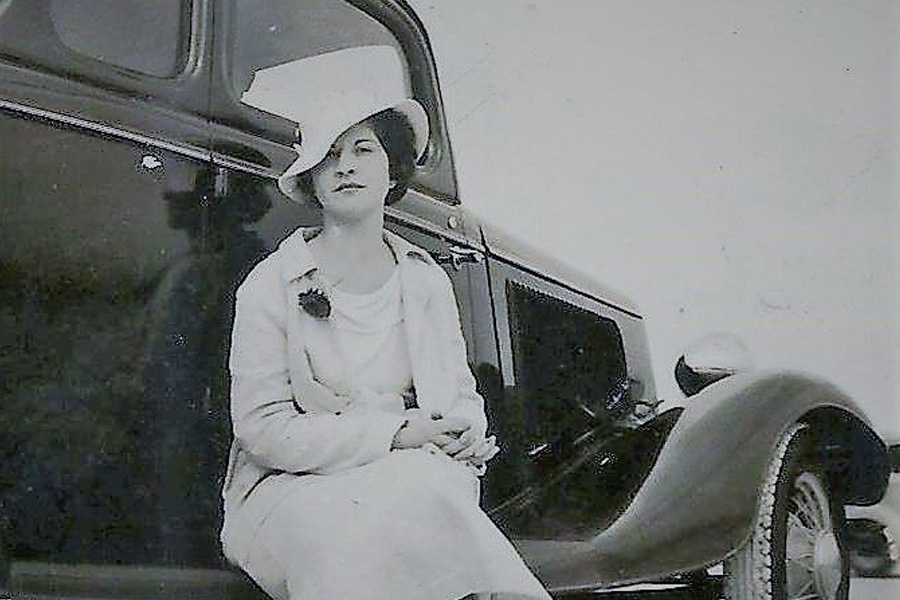
I see Elsie Gardener Hickam as one of those people whose life moves like a steady river under the surface of a larger story. She was born on June 15, 1912, in Atkin near Gary, West Virginia, and she grew up in a world shaped by coal, hardship, close-knit families, and strict expectations. Her birth name was Elsie Gardener Lavender, and the family name Lavender anchors her early years long before the Hickam name became part of her public identity.
She graduated from Gary High School in 1930, which places her at a turning point in American life, just before the long pressure of the Depression became a daily reality for so many families. From there, her story widened. She lived in Coalwood, West Virginia, for years, later moved to Garden City, South Carolina, and died there on October 7, 2009, at the age of 97. That long span matters. It means she watched several Americas pass by, from coal camp routines to the space age to the era when her family story became widely known through books and film.
What stands out to me is that Elsie was never just a background figure. In the family memory, she is a force. She had opinions, ambitions, and a streak of independence that did not fade simply because she lived in a company town. In a place that could feel like a locked room, she kept reaching for a window.
The Lavender Family and Her Roots
Elsie came from the Lavender family, and those roots help explain much of her character. Her parents were James Kent Lavender and Minnie Lee Bouldin Lavender. Her obituary also names them as James and Minnie Lavender, which is the simpler version many readers would see, but the fuller names add texture to the family line.
Her siblings formed a large part of her early world. She had brothers named Kenneth, Joe, Charlie, Victor, and James Kent Lavender, and she had a sister named Mary Lavender. In families like this, siblings are often the first audience, the first rivals, the first witnesses. I imagine that such a household gave Elsie both endurance and social instinct. She had to learn how to be heard, how to hold a line, and how to read the room fast.
The Lavender family appears in the record less as a set of dramatic public figures and more as the human frame around Elsie’s life. That matters. Not every family leaves behind monuments. Some leave behind temperament, habits, and ways of thinking. Elsie seems to have carried all three forward.
Marriage to Homer Hickam Sr.
Elsie married and had children with Homer Hickam Sr. As Olga Coal Company’s mine superintendent, he was vital to the Hickam household’s coal economy. Their relationship was difficult, strong-willed, and profoundly rooted in coal town life.
The family story implies they were high school classmates and Elsie lived a distinct life before marriage. One vivid thread says she moved to Florida after high school, met Buddy Ebsen in Orlando, and returned to West Virginia. That detail sharpens her life. There was more than one path for her. She returned from movement, brightness, and possibility to the coalfields’ drab weight.
The marriage of Homer Hickam Sr. and Elsie seems to have been based on obligation, conflict, and history. We remember her for standing up to him. I remember the vision. The strongest individual in many family stories is not the loudest. The person stabilizes the household.
Her Children and the Family Legacy
Elsie and Homer Hickam Sr. had two sons, and both became significant in very different ways.
James Venable Hickam, often called Jim Hickam, was her older son. He became a long-time football coach at Northside High School in Roanoke, Virginia. His life reflects discipline, teaching, and community influence. He married Betty Laphew, and his name remains part of the Hickam family’s public record through both family memory and local reputation.
Her younger son was Homer Hadley Hickam Jr., widely known simply as Homer Hickam. He became a NASA engineer and later an author whose memoirs brought the Coalwood story to national attention. He married Linda Terry Hickam. Through him, Elsie became known not only as a mother but as a central figure in a cultural story about dreams, science, and escape from limits.
Here is a simple family view of the people most often connected to Elsie:
| Family Member | Relationship to Elsie Gardener Hickam | Notable Detail |
|---|---|---|
| James Kent Lavender | Father | Named in family records and obituary references |
| Minnie Lee Bouldin Lavender | Mother | Also listed more simply as Minnie Lavender |
| Kenneth Lavender | Brother | Predeceased her |
| Joe Lavender | Brother | Predeceased her |
| Charlie Lavender | Brother | Predeceased her |
| Victor Lavender | Brother | Predeceased her |
| James Kent Lavender | Brother | Predeceased her |
| Mary Lavender | Sister | Lived in Mount Airy, North Carolina |
| Homer Hickam Sr. | Husband | Mine superintendent, father of her children |
| James Venable Hickam | Son | Football coach, married Betty Laphew |
| Homer Hadley Hickam Jr. | Son | NASA engineer and author, married Linda Terry Hickam |
That list is the spine of her public family story, but the emotional structure is larger. Elsie appears again and again as the person who pushed her children toward education and better chances. She was not content to let the mine define their future. She seems to have understood, with almost ferocious clarity, that a child’s life should not be the echo of a town’s only industry.
Community Life and Practical Achievement
Elsie left no corporate legacy or official honors. She achieved more domestic, civic, and practical things, but they mattered. She was in the Olga Woman’s Club and Coalwood Community Church Methodist Women’s Circle. She also raised money for local school programs.
That labor is often overlooked since it happens in kitchens, church halls, and school basements. But I think she left her mark there. She kept communities together. She looked after children, church, and town. She did invisible work till it was gone.
Her story has a significant financial element. Homer Hickam later explained how her finances supported his college goals. The fact that the assets were in her husband’s name shows her thoughtfulness and the limitations women faced at the time. She was watchful. She planned. She saved for the future.
The Elsie in Memory and Popular Culture
Elsie’s life became known far beyond the family because Homer Hickam wrote about Coalwood and the people who shaped him. In those retellings, Elsie emerges as more than a mother. She becomes a kind of north star, sometimes hidden by clouds, but always there.
She is also connected to the story behind Carrying Albert Home, where family history and legend fold together like layers of old paper. Her desire for Myrtle Beach and her sense of being trapped in Coalwood create a poignant contrast. One part of her belonged to the mountains. Another part of her kept looking toward the water.
That tension gives her story its power. She was loyal, but restless. Loving, but not passive. Rooted, but never fully settled. That is why she remains memorable.
FAQ
Who was Elsie Gardener Hickam?
Elsie Gardener Hickam was a West Virginia woman born in 1912 who became known through her family story, especially as the mother of Homer Hickam Jr. and as a central figure in Coalwood family history.
What was her maiden name?
Her maiden name was Elsie Gardener Lavender.
Who were her parents?
Her parents were James Kent Lavender and Minnie Lee Bouldin Lavender, often referred to more simply as James and Minnie Lavender.
Who was her husband?
Her husband was Homer Hickam Sr., a mine superintendent in the Coalwood area.
Who were her children?
She had two sons, James Venable Hickam and Homer Hadley Hickam Jr.
What kind of work did she do?
She was active in church and community groups, helped raise funds for local school activities, and played a major role in her family’s support system.
Why is she remembered today?
She is remembered because her life became part of the Hickam family legacy, especially through the stories, memoirs, and public reflections of her son Homer Hickam Jr.
Where did she spend her later years?
She later lived in Garden City, South Carolina, and died there in 2009.