I have always believed that some stories refuse to fade into silence. They burn like embers long after the fire seems extinguished. That is exactly how I feel when I reflect on Gabi Goslar. Born on October 25 1940 in Amsterdam she entered the world as Rachel Gabriele Ida Goslar at a time when darkness was closing in on Jewish families across Europe. Her life became a testament to quiet strength. It intertwined with the fates of parents siblings and grandparents in ways that reveal both profound loss and unbreakable bonds.
Gabi Goslar’s Early Years Amid Rising Peril
Gabi Goslar spent her first years in the Rivierenbuurt neighborhood of Amsterdam. Her family had fled Berlin between 1933 and 1934 after the Nazi rise to power. They settled near the Frank family and tried to build a new life. By age two Gabi already faced unimaginable grief. Her mother Ruth Judith Klee died on October 27 1942 during childbirth. The third sibling did not survive either. This double loss left a void that no words could fill. Gabi and her older sister clung to their father Hans Goslar in the shadow of that tragedy. The apartment at Zuider Amstellaan 16 II became a fragile sanctuary. Yet even there the outside world pressed closer with each passing month.
The Deportation and Years in Captivity
On June 20 1943 authorities raided the neighborhood. Gabi Goslar then just two years and eight months old was deported with her father her sister and their maternal grandparents. The family arrived first at Westerbork transit camp. Conditions tested every ounce of resilience. Then on February 15 1944 they were sent to Bergen Belsen concentration camp. Gabi was three years old. Hunger disease and separation defined those months. Her father Hans was taken from them. He died on February 25 1945. Maternal grandmother Therese Klee Stargardt perished on March 25 1945. Gabi and her sister endured in the children’s section. They became symbols of survival against odds that crushed thousands. In early April 1945 the camp evacuation loaded them onto what history calls the Lost Train. It stalled near Trobitz and Schilda in Germany. Liberation came shortly after. The two sisters emerged as the sole survivors of their immediate family and three generations of relatives.
The Family Web: Every Member Introduced
I must completely introduce each family member. Gabi Goslar flourished in tough soil thanks to their existence. The whole circle from historical and familial sources is here.
Hans Goslar was dad. German-born in 1889, he held high government positions in Prussia until 1933. He was domestic affairs deputy minister and press chief. He was watchful while running a refugee consultancy in Amsterdam. Gabi and her sister lost their protection when he died in Bergen Belsen on February 25, 1945.
Mom was Ruth Judith Klee. The 1901-born instructor maintained strong Jewish traditions. In 1926, she married Hans in Berlin. The family suffered their first blow when she and the unnamed third sibling died on October 27, 1942.
Hanneli or Hannah Pick Goslar was the older sister. She and Gabi shared every difficulty since her November 12, 1928 birth in Berlin. A childhood acquaintance of Anne Frank, she survived Bergen Belsen with her younger sister. Hannah moved to Israel in 1947, married Dr. Walter Pinchas Pick, and had three children, eleven grandchildren, and almost thirty-one great-grandchildren. In Jerusalem, she died on October 28, 2022. Gabi Goslar’s strongest link was her camp-forged sibling bond.
Unnamed third sibling died shortly. This child died with Ruth on October 27, 1942, and was buried alongside her in Muiderberg Jewish cemetery.
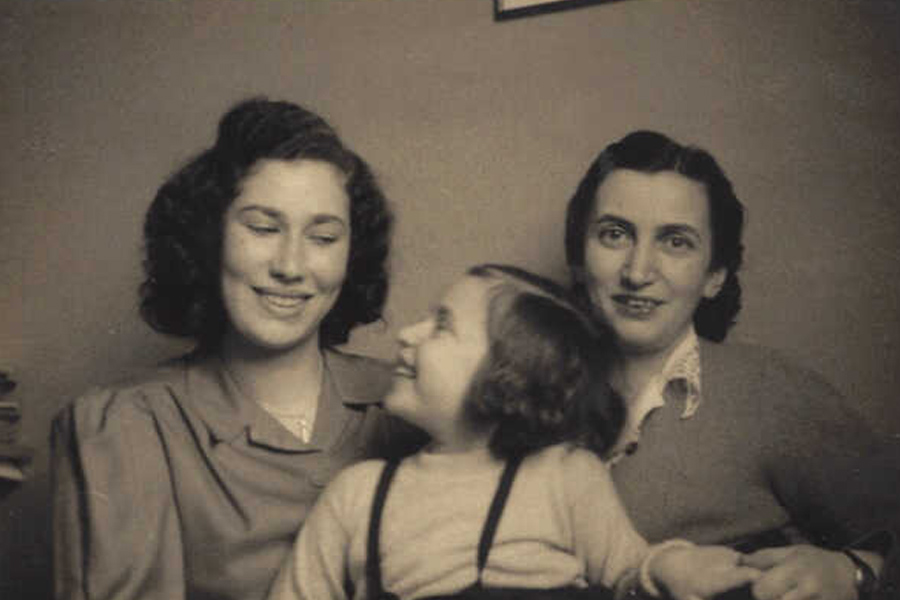
Family was anchored by grandparents. Alfred Klee, her maternal grandpa, was renowned in German Jewish circles and cradled Gabi in a 1940 family photo. The wider network included paternal grandma Ida Goslar. Therese Klee Stargardt’s maternal grandmother perished in Bergen Belsen on March 25, 1945, although prewar images reveal a happy family gathering. Gabi continued her grandparents’ tradition with Gustav Goslar, her paternal grandfather.
Aunts and uncles grew it. Alfred’s maternal aunt Esther Eugenie Klee is seated next to him in the 1940 portrait. Marriage made Ruth Pinchas Pick an aunt who provided unobtrusive support in family documents. Hans Klee’s maternal uncle was vital post-liberation. Otto Frank helped him rejoin the sisters in Switzerland in December 1945.
Benjamin Chaim Issac Ravid, cousin, linked through Klee or Goslar. He symbolized Gabi Goslar’s extended family, at least in recollection.
Gabi Goslar is the granddaughter of Alfred Klee, Ida Goslar, Therese Klee Stargardt, and Gustav. Her parents were Hans Goslar and Ruth Judith Klee. She was related to Hanneli and Hannah Pick Goslar. She was aunt to her sister’s descendants. Though weakened by tragedy, this web of relationships lives on in the stories passed down.
| Relationship | Name | Birth and Key Dates | Role in Gabi Goslar’s Life |
|---|---|---|---|
| Father | Hans Goslar | 1889 to February 25 1945 | Protector and guide until Bergen Belsen |
| Mother | Ruth Judith Klee | 1901 to October 27 1942 | Early nurturer lost in childbirth |
| Sister | Hannah Pick Goslar | November 12 1928 to October 28 2022 | Lifelong survivor and companion |
| Maternal Grandfather | Alfred Klee | Pre 1940 | Family patriarch in Amsterdam |
| Paternal Grandmother | Ida Goslar | Pre war era | Part of refugee lineage |
| Maternal Grandmother | Therese Klee Stargardt | Died March 25 1945 | Shared camp ordeal |
| Paternal Grandfather | Gustav Goslar | Pre war era | Ancestral anchor |
| Maternal Aunt | Esther Eugenie Klee | Active in 1940 | Photographed with infant Gabi |
| Aunt by ties | Ruth Pinchas Pick | Post war connections | Extended family support |
| Maternal Uncle | Hans Klee | Active 1945 onward | Post liberation rescuer |
This table captures the scale of the family network. Each name carries a story of courage or sacrifice.
Post Liberation Path to Healing and Israel
Sisters returned to Amsterdam first after 1945 liberation. Uncle Hans Klee helped them recover in Switzerland by December 1945. After her sister, Gabi Goslar immigrated. Gabi joined about 1947–1949, presumably through Youth Aliyah. Hannah arrived in 1947. She married Mozes and became Rachel Moses Goslar. They moved to Petah Tikva, Israel. Gabi concentrated on family recovery rather than public attention there. She occasionally joined Hannah at commemorative events like their 2002 Hannover visit. By sharing images and experiences, the sisters preserved the past without seeking attention.
Gabi Goslar’s Career and Daily Realities
Public records reveal little about professional pursuits. Gabi Goslar lived quietly after aliyah. No documented career milestones or financial details surface in available accounts. Her achievements lie instead in the everyday act of rebuilding. She raised her voice through survival itself. That choice to live on in Petah Tikva speaks volumes. It echoes the resilience her parents instilled before the world turned against them.
Echoes in Recent Times and Social Media
Gabi Goslar maintains an exceptionally low profile today. Mentions arise mainly through her sister’s story or Anne Frank related anniversaries. A December 2025 Yad Vashem reference highlighted her as the little sister in Hannah’s narrative. Social media platforms carry occasional historical posts about her birth date or camp survival. No independent news focuses solely on her in 2024 or 2025. She remains a private figure whose presence continues through family and collective memory.
Extended Timeline of Gabi Goslar
Numbers and dates map her journey with stark clarity. I compiled this timeline to honor the precision of her experiences.
| Date or Year | Event |
|---|---|
| October 25 1940 | Birth in Amsterdam Netherlands |
| 1933 to 1934 | Family flees Berlin and settles in Amsterdam |
| October 27 1942 | Mother and third sibling die in childbirth |
| June 20 1943 | Deportation raid sends family to Westerbork |
| February 15 1944 | Transfer to Bergen Belsen at age three |
| February 25 1945 | Father dies in camp |
| March 25 1945 | Maternal grandmother dies in camp |
| Early April 1945 | Evacuation on Lost Train and liberation |
| December 1945 | Reunion with uncle in Switzerland |
| 1947 | Sister Hannah emigrates to Israel |
| 1947 to 1949 | Gabi Goslar completes aliyah |
| Post 1947 | Marriage to Mozes and settlement in Petah Tikva |
| November 11 2002 | Joint visit to Hannover with Hannah |
| October 28 2022 | Sister Hannah passes away |
| 2020s onward | Continued private life in Israel with occasional commemorative mentions |
This sequence spans eighty five years of endurance. Each entry marks a turning point.
FAQ
Who were the parents of Gabi Goslar and what roles did they play?
Hans Goslar and Ruth Judith Klee shaped Gabi Goslar’s earliest world. Hans provided leadership and protection until his death in 1945. Ruth offered warmth and tradition before her passing in 1942. Their refugee journey from Berlin in 1933 to 1934 set the stage for the family’s Amsterdam years. Together they created a home that Gabi carried in memory through every later trial.
How did Gabi Goslar and her sister survive the Holocaust together?
The two sisters relied on each other in Westerbork and Bergen Belsen. Gabi at ages three and four endured the children’s section while Hannah older by twelve years shielded her as much as possible. They faced hunger separation and disease side by side. Liberation on the Lost Train in April 1945 allowed them to emerge as the only immediate survivors. Their bond became a metaphor for hope a single flame that refused to go out.
What happened to Gabi Goslar’s grandparents and extended relatives?
All four grandparents Alfred Klee Ida Goslar Therese Klee Stargardt and Gustav Goslar perished or faced severe persecution. Therese died in Bergen Belsen on March 25 1945. The others did not survive the era. Aunts like Esther Eugenie Klee and Ruth Pinchas Pick along with uncle Hans Klee and cousin Benjamin Chaim Issac Ravid represented branches that Gabi Goslar remembered. Only the sisters lived to tell the full story.
Where did Gabi Goslar live after the war and did she have a family of her own?
After recovery in Switzerland Gabi Goslar made aliyah to Israel around 1947 to 1949. She married Mozes and became Rachel Moses Goslar. The couple settled in Petah Tikva where she lived privately. While specific details of her own children remain out of public view her life centered on family continuity. She stayed close to sister Hannah until Hannah’s death in 2022.
Why does Gabi Goslar appear less in recent news than her sister?
Gabi Goslar chose a private path after the war. Unlike Hannah who became a nurse and shared her story publicly Gabi focused on quiet recovery. Mentions today link back to Hannah’s legacy or Anne Frank commemorations. This low profile reflects a deliberate choice to honor the past without seeking attention. Her resilience shines through that very silence.
What can a detailed timeline reveal about Gabi Goslar’s life?
The timeline shows a life defined by precise dates of birth loss deportation and rebirth. From October 25 1940 to the 2020s it records eighty five years of transformation. Numbers like the June 20 1943 raid or February 15 1944 transport highlight how history etched itself onto one small girl. The table format turns abstract survival into concrete steps a path I trace with respect each time I review it.