A life shaped by history and public duty
I think of Kerry Sophia Kennedy Townsend as someone born into a house with very long shadows and very bright windows. Her name carries the weight of the Kennedy family, but her own life has been built with a different toolset: medicine, public health, and careful civic engagement. She was born on November 30, 1991, in Bethesda, Maryland, the youngest daughter of Kathleen Kennedy Townsend and David Lee Townsend. From the start, her story sat inside one of America’s most recognizable family trees, yet her path has not been defined by ceremony alone. It has been shaped by study, work, and a persistent interest in people who are left too far outside the system.
The family around her is unusually well known, but the outlines are simple enough to say plainly. Her mother, Kathleen Kennedy Townsend, is the eldest child of Robert F. Kennedy and Ethel Kennedy. Her grandparents sit at the center of a vast public memory. Robert F. Kennedy was a national political figure whose career and assassination became part of American history. Ethel Kennedy became the steady matriarch of the family. On the other side of the family line, Kerry’s great-grandparents include Joseph P. Kennedy Sr. and Rose Fitzgerald Kennedy, along with George Skakel and Ann Brannack. In families like this, heritage can feel like a river that never stops moving.
Parents, siblings, and the Kennedy family circle
Kerry’s parents each occupy a distinct place in her life story. Kathleen Kennedy Townsend is not only a Kennedy by birth but also a political leader in her own right. She served as lieutenant governor of Maryland and built a public reputation around politics, law, and civic service. David Lee Townsend, Kerry’s father, has lived more quietly in public view, with a background tied to teaching and academic life. Together, they raised four daughters.
Kerry’s siblings are part of a close but very public sisterhood. Meaghan Anne Kennedy Townsend is the eldest. Maeve Kennedy McKean followed, and her life later became known through her work in human rights and public health, as well as through the tragedy of her death in 2020. Rose Katherine Kennedy Townsend, often called Kat, is the third sister. Kerry is the youngest. In a family where the name Kennedy can echo loudly across generations, each daughter still seems to have been given space to become her own person.
That matters because public families can flatten people into symbols. I do not think that is fair here. Kerry’s story feels more like a braid than a banner. The family identity is there, yes, but so are private choices, long training, and daily professional labor. The family tree is tall, but it is also rooted in ordinary things, like marriage, siblings, children, grief, work, and the effort to build a meaningful adult life.
Education, medicine, and professional identity
Kerry switched to medicine. George Washington University School of Medicine awarded her a medical degree after Bowdoin College biology. She worked at the National Institutes of Health on hepatitis C research before medical school, suggesting a knack for difficult challenges and patient outcomes. She later finished internal medicine residency at NewYork-Presbyterian/Weill Cornell, which tested her clinical abilities and endurance.
I notice her interests as well as her title as a doctor. She has worked in internal medicine, health policy, and underinsured/uninsured patient care. That combo reveals much. She seems unwilling to address merely the symptoms. She appears to be interested in the mechanics underlying symptoms, pipelines beneath walls, and how access might be a diagnostic.
Her writing regarding medicine and public health, especially during COVID-19, is public. Her articles and commentaries straddled bedside medicine and social issues. Standing there is hard. A clinician sees one patient. Consider the full machine while making health policy. Kerry’s career seems to revolve around that tension.
Marriage, family life, and the next generation
Kerry married Max Meltzer on June 8, 2019, in Washington, DC. Their marriage is part of the story now, but it does not erase her own family identity. In fact, it expands it. Public mentions suggest they have a child, Ava, which adds another branch to the Kennedy tree. New generations always change the weather around old names.
In the wider Kennedy family network, Kerry is connected not just to her parents and sisters, but to a larger circle that includes cousins, in-laws, and public allies. The family often appears together at political events, memorials, and human rights gatherings. That visibility can feel like a stage, but it can also function like a hearth. The same family that has been scrutinized for decades also keeps gathering around causes, grief, and celebration. Kerry is part of that continuum.
Public voice, recent attention, and modern relevance
Kerry gained fame during the pandemic. Since she is a doctor who watched young adults get sick, her writing and speaking have special power. Her voice was amplified by family status and medical expertise. This was not a passing statement. She described her clinical experience, where panic can precede lab results.
She recently criticized Robert F. Kennedy Jr.’s vaccine views, reentering the discourse. This sensitive family problem shows how public conviction can split close families. I still think it shows professional integrity. She speaks clearly when medical evidence and public health are at stake, even if it offends her extended family. Must be strong.
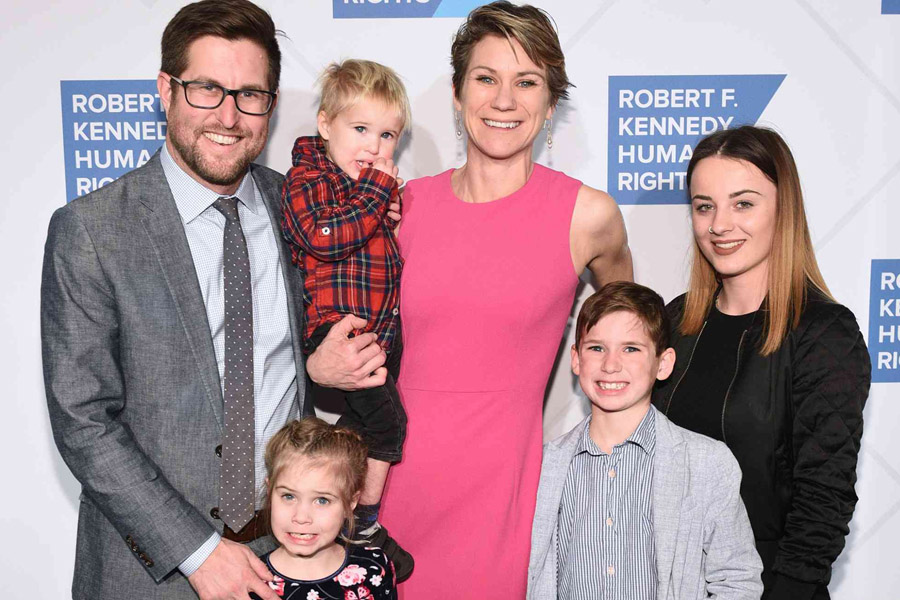
Family activities, memorials, and human rights activism have further raised her profile. She and Max have featured in Kennedy family settings associated to Robert F. Kennedy Human Rights, bolstering her sense of heritage and institution. Old family name is not in a museum case. It adapts, argues, mourns, and recommits.
Extended family map
The Kennedy family is often described through big names, but I find the relationships themselves more revealing than the headlines. Kerry’s grandparents, Robert F. Kennedy and Ethel Kennedy, anchor the maternal side. Her mother, Kathleen Kennedy Townsend, brings political experience and policy knowledge. Her father, David Lee Townsend, provides a quieter academic and intellectual presence. Her sisters, Meaghan, Maeve, and Rose Katherine, each reflect a different facet of the family’s public and private life.
Beyond them, the older generations matter too. Joseph P. Kennedy Sr. and Rose Fitzgerald Kennedy represent the foundation of the clan’s political rise. George Skakel and Ann Brannack connect the family to Ethel Kennedy’s side, which is less talked about but equally essential. Together, these names form a kind of cathedral of lineage. It is not made of stone. It is made of marriages, children, public service, loss, and repetition.
FAQ
Who is Kerry Sophia Kennedy Townsend?
Kerry Sophia Kennedy Townsend is a physician from the Kennedy family. She was born in 1991 and is the daughter of Kathleen Kennedy Townsend and David Lee Townsend. Her work has focused on internal medicine, health policy, and public writing around medicine and public health.
What is Kerry Sophia Kennedy Townsend known for?
She is known for being part of the Kennedy family and for building a medical career of her own. She has worked in internal medicine, written publicly about COVID-19 and other health topics, and spoken on issues involving access to care and scientific evidence.
Who are her immediate family members?
Her parents are Kathleen Kennedy Townsend and David Lee Townsend. Her sisters are Meaghan Anne Kennedy Townsend, Maeve Kennedy McKean, and Rose Katherine Kennedy Townsend. She is married to Max Meltzer.
How is Kerry Sophia Kennedy Townsend connected to Robert F. Kennedy?
Robert F. Kennedy is her grandfather. That makes her part of the Kennedy family’s third generation through Kathleen Kennedy Townsend. Ethel Kennedy is also her grandmother.
Does Kerry Sophia Kennedy Townsend have children?
Public mentions indicate that she and Max Meltzer have a daughter named Ava.
What kind of work has she done in medicine?
She studied biology, earned an M.D., trained in internal medicine, worked in NIH research on hepatitis C, and practiced in New York City. Her professional focus has included health policy and care for patients who face barriers to access.
Why does her family matter in her story?
Her family matters because it shapes the public setting of her life, but it does not fully define her. The Kennedy name brings history, attention, and expectation. Her own work in medicine gives that inheritance a different kind of meaning.